Fushimi Inari Taisha: A Guide From People Who Live in Kyoto
Quick answer
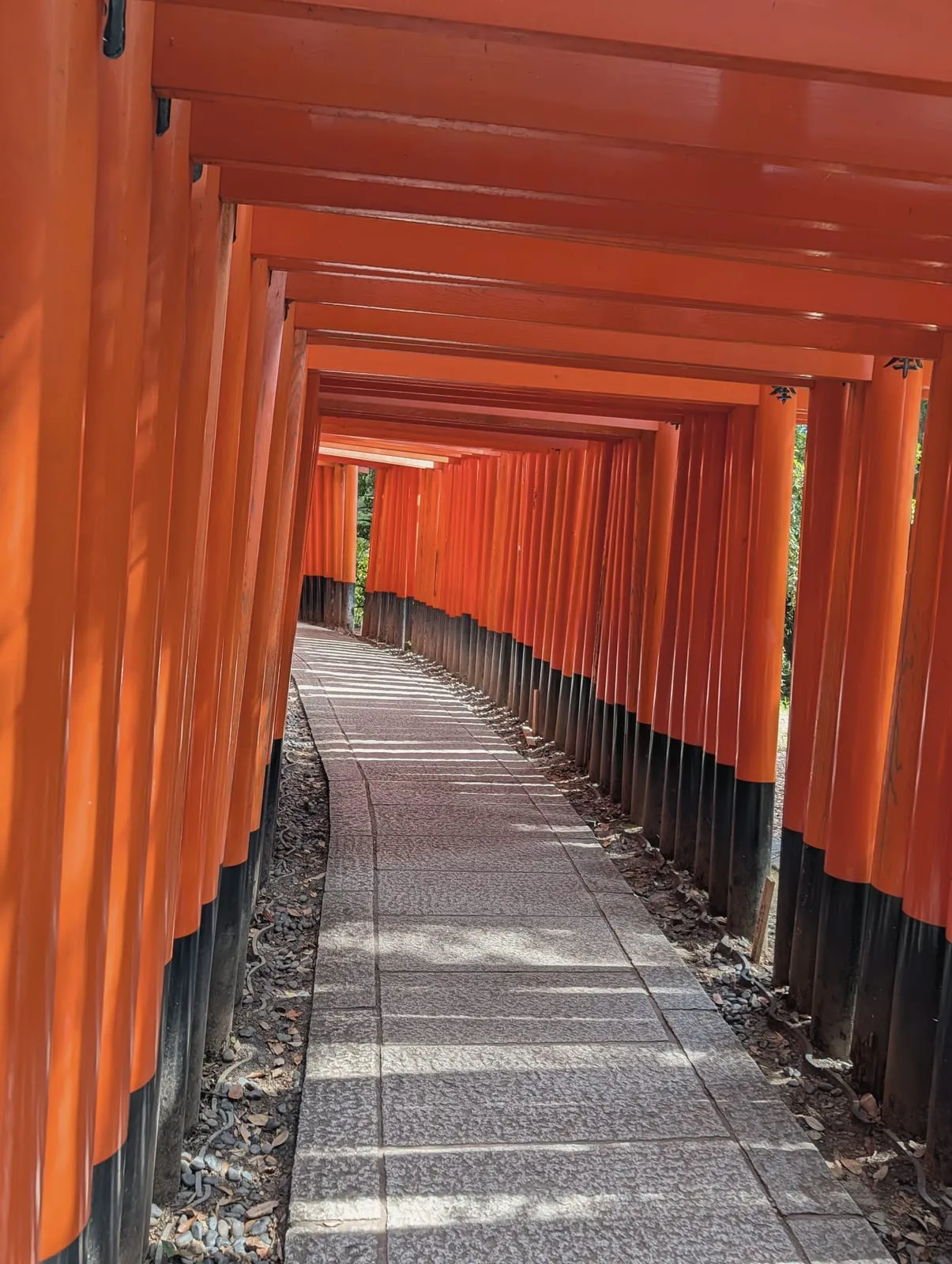
Fushimi Inari Taisha is the head shrine of Inari, in the south-east of Kyoto, with paths of vermilion torii gates that climb Mount Inari. Entry is free. To the summit and back takes us one to one and a half hours. Expect crowds at almost any time.
What Fushimi Inari Taisha is
Fushimi Inari Taisha (伏見稲荷大社) is a Shinto shrine in Fushimi, in the south-east of Kyoto. It is the head shrine of Inari, the deity of rice and, over time, of trade. Foxes are Inari’s messengers, so stone and bronze foxes stand at almost every turn.
The shrine does not end at the main hall. Behind it rises Mount Inari (稲荷山), and the whole mountain belongs to the shrine. Paths lined with torii gates climb from the bottom to the top.
The layout, from gate to summit
Think of the shrine as one path that climbs in five stages. The shrine’s own map, near the gate, covers the first three.
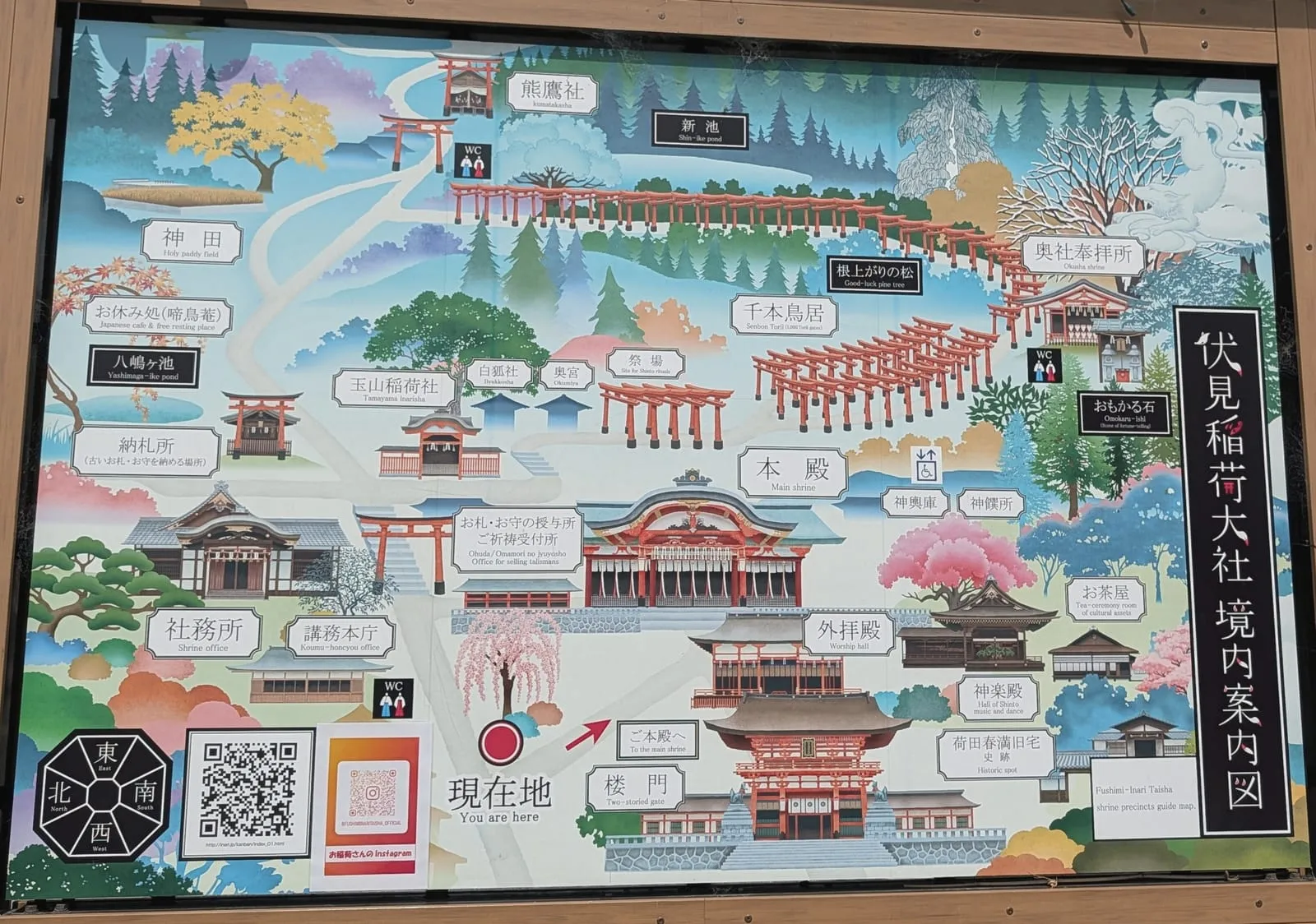
- Romon gate and main hall (楼門・本殿). The two-story gate at the top of the approach, with the halls behind it.
- Senbon Torii (千本鳥居). Behind the halls, the path splits into two rows of gates, side by side.
- Okusha Hohaisho (奥社奉拝所). Where the two rows end, a small hall faces the mountain.
- Yotsutsuji (四ツ辻). A crossroads about halfway up, with a view over the city. Above it, the paths form a loop.
- Ichinomine (一ノ峰). The highest point of the mountain, on that loop.
Each gate was given to the shrine by a person or a company. Their name and the date are written in black on the back of the pillars, so you read them on the way down.
Between the gates higher up sit tea houses and clusters of small stone altars called otsuka (お塚). People and groups set them up to worship at.
The walk up the mountain
To the summit and back takes us one to one and a half hours. If you are short on time, turn around at Yotsutsuji. The view is there, and the rest is a loop.
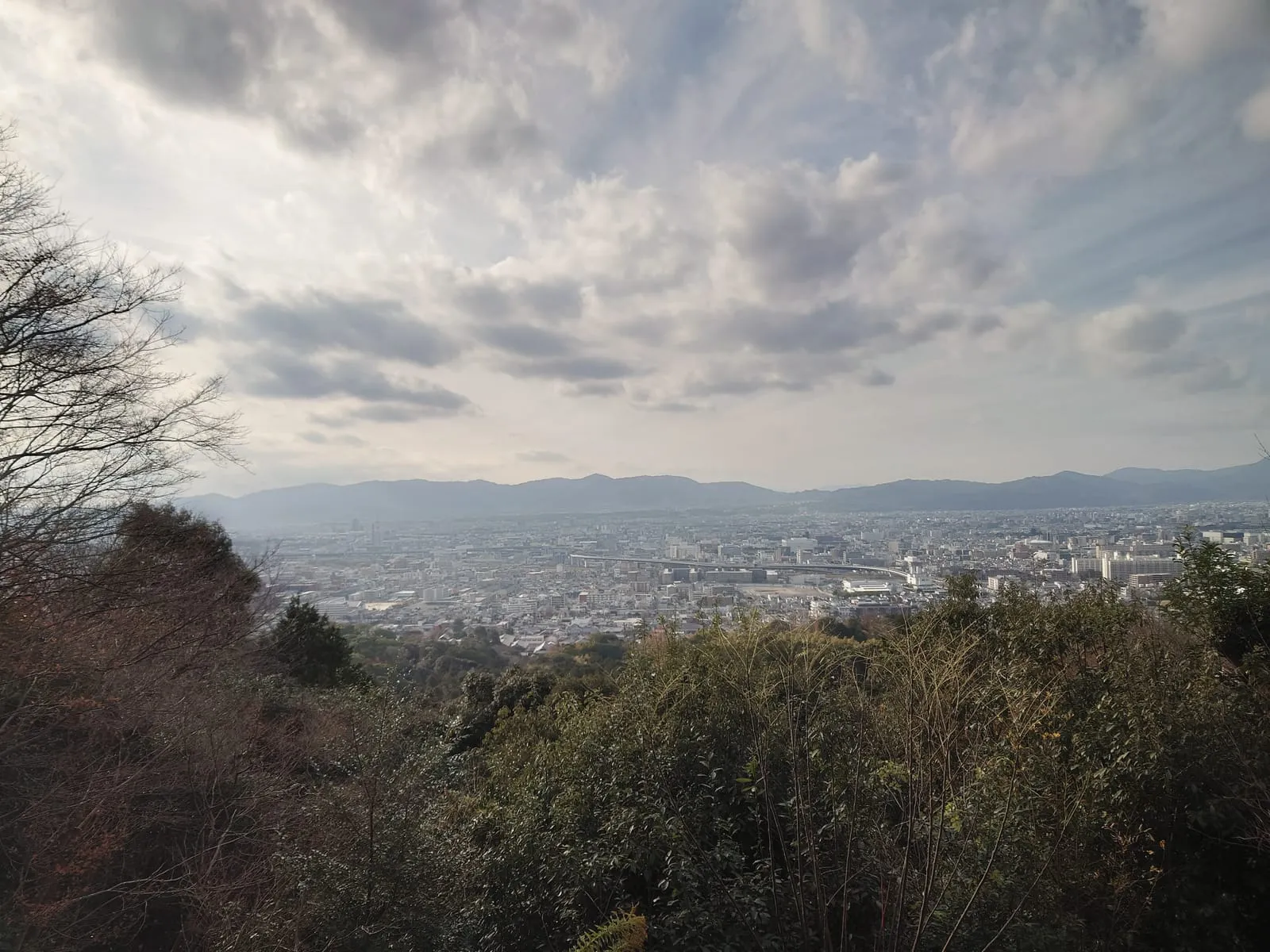
Past the Okusha Hohaisho, the path becomes a mountain trail. In summer, the heat and humidity make the climb feel longer than it is.
Vending machines stand near the main hall but thin out on the way up, and near the summit there may be none. There are small shops near the top, but buy your drinks at the foot.
The crowds
Fushimi Inari is busy at almost any time. It was crowded in the heat of August, and again at the end of the year.
The worst of it is inside the Senbon Torii. The path is narrow, and people wait for a gap to take a photo with no one in the frame.
The crowd thins with every flight of steps above the Okusha Hohaisho. It never empties, though. Even at the summit, there were people ahead of us and behind.
If the crowds or the distance keep you from coming, we can go in your place. We visit this shrine, where people have prayed for more than a thousand years, and offer a prayer on your behalf in the traditional manner. Then we send you a written report of the visit. It is a separate service from our postcards. About rituals
Getting there
Most visitors use one of two stations at the foot of the shrine. Their names differ by one word.
- JR Inari Station (稲荷駅), on the JR Nara Line from Kyoto Station.
- Keihan Fushimi-Inari Station (伏見稲荷駅), on the Keihan Main Line, which runs from Gion-Shijo and from Osaka.
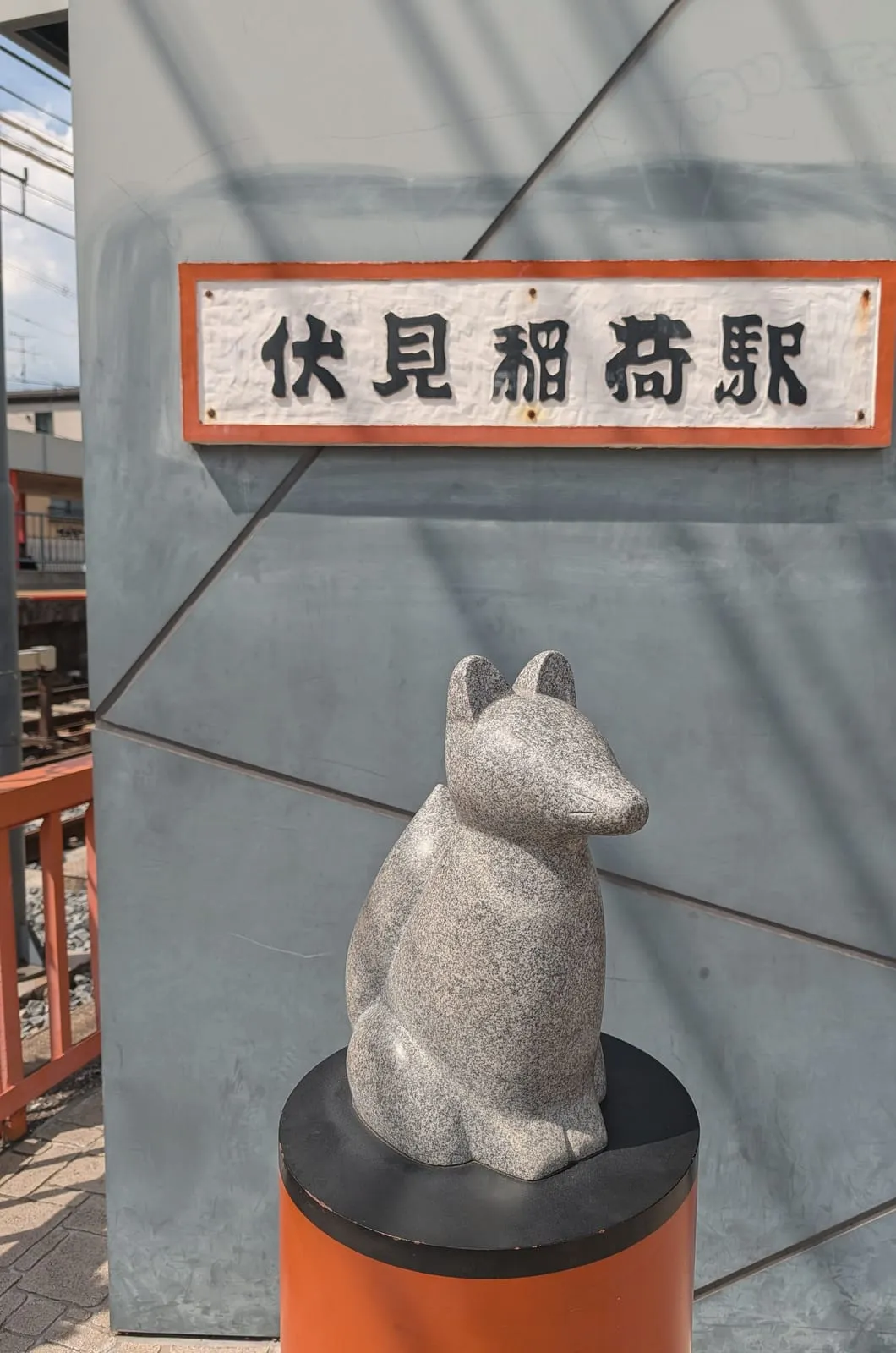
There is a quieter third. Ryukoku-Daigaku-mae-Fukakusa Station (龍谷大前深草駅) is one stop south of Fushimi-Inari on the Keihan line. The streets from there carry far fewer people. There are far fewer shops, too, but the walk is easier going.
Manners on the grounds
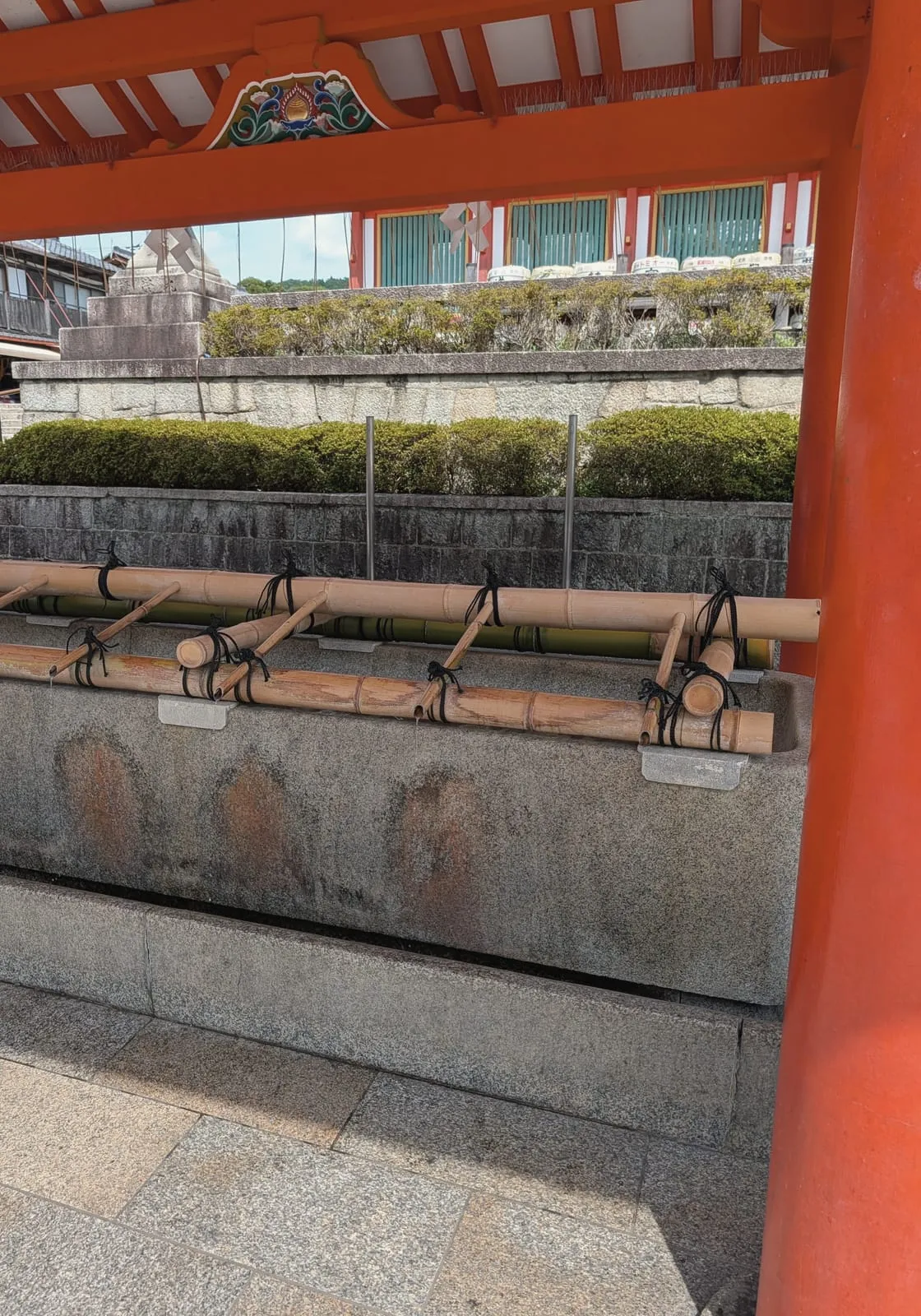
Before praying at the halls, most people rinse their hands at the temizuya, the covered water basin. At the halls, the usual form is two bows, two claps, and one more bow.
The paths through the Senbon Torii are narrow. Step to one side when you stop, and keep your hands and bags off the gates.
The otsuka altars belong to the people who set them up. Look, and leave the offerings as they are.
Field Notes
2026-08-22 14:10, clear, hot
- Visitors from all over the world. Inside the Senbon Torii, people waited their turn for a photo with no one in it, and the line moved a gate or two at a time.
- The afternoon was in the high 30s °C, close to 100°F, and heavy with humidity. The shade under the gates did little.
- Above the gates the path turns into a mountain trail. The air changed with it, and smelled of damp soil and leaves.
Know before you go
- Entry
- free (checked on August 22, 2026)
- Summit and back
- one to one and a half hours (checked on August 22, 2026)
- Drinks
- Vending machines stand near the main hall but thin out on the way up, and near the summit there may be none. There are small shops near the top, but buy your drinks at the foot. (checked on August 22, 2026)
- Stations
- JR Inari or Keihan Fushimi-Inari. Keihan Ryukoku-Daigaku-mae-Fukakusa for a quieter walk.
FAQ
Is Fushimi Inari free to enter?
Yes. Entry to the grounds is free.
Do I have to climb to the top?
No. The two rows of the Senbon Torii are near the bottom, behind the main hall. Yotsutsuji, a crossroads with a view over the city, makes a good place to turn around. To the summit and back takes us one to one and a half hours.
Is Fushimi Inari crowded?
Most of the time, yes. It was crowded in the heat of August, and again at the end of the year. The crowd thins as you climb, but even at the summit it never empties.
Is there water on the way up?
Vending machines stand near the main hall but thin out on the way up, and near the summit there may be none. There are small shops near the top, but buy your drinks at the foot.
Which station should I use?
JR Inari Station or Keihan Fushimi-Inari Station, both at the foot of the shrine. For fewer people, get off one stop south on the Keihan line, at Ryukoku-Daigaku-mae-Fukakusa, and walk.
A postcard from Kyoto
Kyoto is full of small things like this — a plaque, a fox, a gate, a slip of paper. Most visitors walk past them. We live here, so we notice.
Every month we choose a postcard for the season and write a few lines on the back by hand — what we noticed, and what the month is like here. Then we post it to you, or to someone you’re thinking of.
And, for a turning point
A new year, an exam, a move across the world. There is a smaller, older thing we can do on your behalf: walk to a shrine here in Kyoto, carry your wish, and send you a written report of the visit — photo-documented, so you can see it happened.
A separate service, ordered on its own. It is not part of the postcards.
About rituals